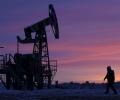
The Reserve Bank of India (RBI) has projected that crude oil prices will average USD 85 per barrel and the rupee will weaken to 94 against the dollar by FY27, according to its bi-annual Monetary Policy report.

Sensex plunges over 1,400 points and Nifty slips near 22,250 amid Trump's Iran threat, rising crude oil prices, and FII selling. Here are the key reasons behind today's market crash.
Indian equities on Dalal Street saw volatility as global market trends and fresh tariff concerns linked to Donald Trump impacted investor sentiment. Track Sensex, Nifty50 movement and key market drivers for April 2, 2026.

Rupee slumped 69 paise to an all-time low of 92.18 against the US dollar in early trade on Wednesday, as a sharp spike in crude oil prices amid geopolitical tensions following the escalation of the US-Iran conflict weighed on investor sentiment.

Indian stock markets experienced a significant sell-off, with the Sensex tumbling over 1,300 points, driven by escalating crude oil prices due to US-Iran tensions and Prime Minister Narendra Modi's call for austerity measures, which amplified investor concerns about India's economic outlook.

Indian benchmark stock indices Sensex and Nifty rebounded nearly 1 per cent, snapping a three-day decline, driven by rallies in Reliance Industries and Sun Pharma, alongside positive global market trends and easing geopolitical tensions.

Indian stock market benchmarks Sensex and Nifty closed higher on Tuesday, buoyed by a drop in crude oil prices, a rally in global markets, and strong buying in IT stocks.

The Indian rupee weakened to a record intra-day low against the US dollar due to a strengthening greenback, continuous foreign capital outflows, and elevated global crude oil prices amidst the West Asia conflict.

The rupee declined 31 paise to settle at 90.65 against the US dollar on Friday, weighed down by geopolitical uncertainties over the US-Iran talks, and a sharp rise in global crude oil prices.

Benchmark equity indices Sensex and Nifty tumbled in early trade on Wednesday, tracking a bearish trend in Asian markets, as the conflict in West Asia widened, driving oil prices higher.

Sensex and Nifty post steepest weekly loss in over a year, falling nearly 3 per cent.

'Once the market decides it wants to go up, it goes up -- no amount of bad news can really hold it back.'

Indian benchmark stock indices Sensex and Nifty rallied for the second consecutive day, closing nearly 1 per cent higher, driven by gains in metal and auto sectors and positive global market trends.

This is the time for India to plan forward fully, with the goal of Atmanirbharata, and energy security. The Persian Gulf is no longer a reliable source, points out Rajeev Srinivasan.

Indian benchmark stock indices Sensex and Nifty rebounded, closing over 1% higher, mirroring a global equities recovery after recent losses due to geopolitical tensions.

Indian stock markets recovered from early losses to close higher, driven by value buying in IT and banking shares and a rebound in the rupee.

Indian stock markets tumbled sharply with the Sensex falling 800 points and nearly 4 lakh crore wiped out in a single session. Here are the 6 key factors, including rupee weakness and global cues, behind the crash.
Indian markets on Dalal Street rallied sharply as easing tensions in the US-Iran conflict and stable oil prices boosted sentiment. Track Nifty 50 and BSE Sensex performance and key global triggers.

Indian stock market indices Sensex and Nifty closed nearly 1 per cent higher, marking their third consecutive day of gains, supported by a slight decrease in crude oil prices and positive global market trends.

Among Sensex firms, HCL Tech, ICICI Bank, Titan, Trent, Kotak Mahindra Bank, Hindustan Unilever, Mahindra & Mahindra and HDFC Bank were the major laggards. However, Adani Ports, Bharti Airtel, SBI, NTPC and Sun Pharma were among the gainers.

The rupee plunged to a fresh low of 93.72 against the dollar on Friday, falling 1.15 per cent in a single session - its sharpest one-day decline since February 24, 2022 - as elevated crude oil prices and strong dollar demand from oil-marketing companies and foreign portfolio investors (FPIs) weighed on the currency.
Indian stock market benchmark indices Sensex and Nifty experienced a significant decline, driven by escalating tensions in the Middle East and rising crude oil prices.

Indian benchmark indices Sensex and Nifty experienced a sharp decline in early trading due to escalating tensions in the Middle East, driving crude oil prices higher. Global market bearishness and foreign fund outflows further contributed to investor unease.

Benchmark indices tumbled about 2 per cent on Friday, capping one of the most turbulent weeks for domestic equities as investors fretted that the West Asian conflict could drag on for weeks or even months.

India's aviation sector is facing fresh turbulence, with rising fuel costs, the Ministry of Civil Aviation's free-seat directive, and geopolitical disruptions in West Asia clouding near-term earnings visibility.

Among Sensex firms, Infosys, Bharti Airtel, Adani Ports, Sun Pharma, Tech Mahindra, Eternal, Axis Bank and Maruti were the major laggards. However, ITC, UltraTech Cement, Tata Steel and HDFC Bank were among the gainers.

From the Sensex firms, Tech Mahindra, Tata Consultancy Service, Infosys, HCL Tech, Tata Motors, Trent, Reliance Industries and Larsen & Toubro were among the major laggards. However, Eternal, Bajaj Finance, Adani Ports and UltraTech Cement were among the gainers.
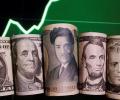
Reserve Bank of India (RBI) Governor Sanjay Malhotra stated that recent regulatory measures to address foreign exchange market volatility, such as capping banks' net open positions, are temporary and aligned with current market conditions, not signalling any structural shift in policy.

Indian equity markets experienced a volatile session, with the Sensex and Nifty recovering some ground after a significant plunge the previous day. Gains were driven by PSU bank, IT, and metal stocks, but concerns over rising fuel prices and geopolitical tensions limited the recovery.

The core issues to be settled -- access to Hormuz, Israel's aggression in Lebanon, the question of Iran's nuclear programme, sanctions relief and compensation -- are thorny enough to require weeks of patient negotiation. The most likely outcome of the opening sessions is that both sides take the measure of each other, establish what is and is not negotiable, and return home without having broken anything. That would count as progress.
Indian equity investors experienced a significant loss of 16.32 lakh crore due to a two-day stock market decline fueled by escalating geopolitical tensions involving the US, Israel, and Iran.

Oil marketing companies (OMCs), paint manufacturers, tyre producers, and aviation stocks witnessed significant gains as Brent crude oil prices slipped below $70 per barrel. The price drop came after a double blow: The US imposed tariffs on Canada and Mexico, including energy imports, and OPEC+ - the group of major oil-producing nations including Russia - announced an output increase of 138,000 barrels per day, the first such hike since 2022.
Indian equities on Dalal Street saw volatility as global market trends and fresh tariff concerns linked to Donald Trump impacted investor sentiment. Track Sensex, Nifty50 movement and key market drivers for Feb 24, 2026.
Equity benchmark indices Sensex and Nifty experienced a significant decline, primarily driven by a selloff in IT stocks due to concerns about AI disruption and renewed worries over global trade.
Among Sensex firms, Tata Steel, HCL Tech, Bajaj Finance, Bajaj Finserv, Bharat Electronics and Eternal were the major laggards. However, Maruti, Mahindra & Mahindra, Tata Motors Passenger Vehicles and ITC were among the gainers.

The rupee fell 23 paise against the greenback to settle at a new all-time low of 91.01 (provisional) on Tuesday, weighed down by relentless foreign fund outflows, no breakthrough in India-US trade deal, and persistent US dollar buying.

Households should moderate large discretionary expenses for the time being.
'They should prioritise essential spending. They should maintain an emergency fund covering 6 to 12 months of expenses.'
From the 30-Sensex firms, Eternal, Infosys, Asian Paints, UltraTech Cement, Bajaj Finance, HCL Tech and Titan were among the biggest laggards. However, Tata Steel, Mahindra & Mahindra, Bajaj Finserv and Axis Bank were among the biggest gainers.

'The next two to three weeks will not be decided in Washington.' 'They will be decided in Tehran, in whatever calculation Iran makes about the costs of continued resistance against the costs of appearing to have yielded.'
From the 30-Sensex firms, Bajaj Finance, Asian Paints, HCL Tech, Tata Consultancy Services, Eternal and Sun Pharma were among the biggest laggards. However, Titan, NTPC, Axis Bank, UltraTech Cement, Reliance Industries and Hindustan Unilever were the gainers.
